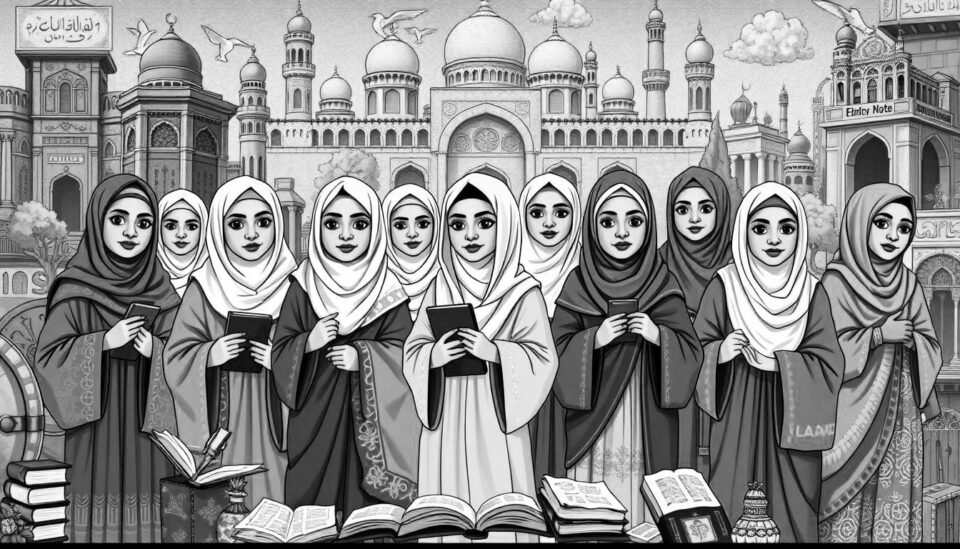

Building the Next Generation, A Waqf for Children’s Prayer and Learning Spaces
Creating dedicated children’s prayer spaces is one of the most transformative investments a mosque community can make. When children have thoughtfully designed children’s prayer spaces, they develop positive associations with worship and Islamic learning from an early age. Imagine a child’s first experience at the mosque: they arrive, full of curiosity and energy. The main prayer hall feels overwhelming—it’s big, it’s crowded, and they might not be able to see over the shoulders of adults ahead of them. They’re uncomfortable. They don’t understand what’s happening. After a while, they might decide: “This isn’t for me.”
Now imagine a different scenario. The child enters well-designed children’s prayer spaces—areas that are scaled to them, welcoming, beautiful, and designed for learning. They can see the imam, participate in the prayer and feel part of the community, not excluded from it. They leave the mosque thinking: “I belong here. This is my faith community.”
These two scenarios produce vastly different long-term outcomes. And one of the most powerful ways to create the second scenario is through a waqf dedicated to building and maintaining quality children’s prayer spaces.
Why Children’s Prayer Spaces Matter Spiritually and Developmentally
The Islamic tradition emphasizes the importance of raising children in the faith. The Quran reminds us that children are a trust from Allah. The Prophet Muhammad (peace be upon him) taught that we are responsible for educating and guiding them spiritually.
Yet many mosques don’t have dedicated children’s prayer spaces or learning environments. Children are expected to sit with adults, to remain still, to follow along with prayers they may not yet understand. Some mosques have Sunday schools that meet in cramped offices or shared spaces not ideally suited for learning.
The result: many Muslim children grow up with disconnected, uncomfortable experiences of their faith community. They may not develop the deep connection to mosque, to prayer, to Islamic learning that should be central to their Islamic identity.
The Transformative Power of Dedicated Children’s Prayer Spaces
When a mosque invests in dedicated, beautiful children’s prayer spaces, something remarkable happens:
- Attendance increases: Families are more likely to come if they know their children will be comfortable
- Early connection: Children develop positive associations with the mosque and prayer from an early age
- Learning environment: Teachers can actually teach when students are in appropriate, well-designed spaces
- Community pride: Parents see that their mosque cares about the next generation
- Long-term engagement: Children who feel welcomed are more likely to remain connected to their faith community as they grow
What Should Children’s Prayer Spaces Include?
A comprehensive waqf dedicated to children’s prayer spaces might fund:
Prayer Area:
- Child-scaled furniture and prayer mats
- Quality, durable carpeting appropriate for children
- Age-appropriate decoration and Islamic calligraphy
- Good lighting and climate control
- Space for children to lead prayer and practice
Learning Areas:
- Tables and seating appropriate for different age groups
- Display spaces for children’s Islamic art and learning materials
- Storage for teaching materials and books
- Board or projection space for instruction
- Space for small group Quran recitation
Facilities:
- Clean, child-friendly ablution areas
- Age-appropriate restrooms
- Safe, organized storage
Supplies and Materials:
- Quality prayer mats for children (these wear faster than adult mats!)
- Islamic learning materials, books, and educational supplies
- Art supplies for Islamic crafts and calligraphy practice
- Digital resources for learning
Creating a Children’s Spaces Waqf: A Practical Guide
1: Assess Current Conditions
Visit your mosque’s existing children’s spaces (or lack thereof). What’s working? What’s lacking? Talk to parents, teachers, and children themselves. What do they need?
2: Define Your Vision
Envision what dedicated children’s spaces could look like. How much space do you need? What age groups should be served? What activities will take place?
3: Calculate Costs
Get quotes for:
- Initial setup (furniture, carpeting, decoration)
- Ongoing maintenance and replacement
- Annual supplies and materials
- Staff or volunteer training
For example, a children’s space might cost $15,000-$30,000 initially, with $3,000-$5,000 annual maintenance needs.
4: Determine Your Waqf Structure
You might structure this as:
- A capital waqf that generates annual returns for maintenance and supplies
- An annual waqf where donors contribute annually to support the program
- A combination approach with capital for major items and annual funding for supplies
5: Secure Funding
Identify potential donors:
- Parents who will directly benefit
- Grandparents wanting to invest in grandchildren’s Islamic education
- Successful professionals looking for meaningful giving opportunities
- The broader community who values the next generation
6: Plan for Quality and Sustainability
Partner with quality suppliers who understand Islamic values. For example, when selecting prayer mats and furnishings, choose suppliers like Nusantara Carpet who specialize in beautiful, durable Islamic furnishings designed to last in active community spaces.
Quality matters, especially with children’s furnishings that get heavy use. Cheap mats wear out quickly, requiring frequent replacement. Quality mats last longer and communicate to children that their space is valued.
Step 7: Establish Governance
Create clear guidelines for:
- How the space is used and maintained
- Who oversees the program
- How annual reporting happens
- How the waqf adapts as children’s needs evolve
Real-World Example: The Mosque Al-Hana Children’s Learning Initiative
Mosque Al-Hana serves a young, growing community with many families. The mosque was small, with no dedicated children’s space. Parents struggled to bring children to prayer and classes.
A group of five parents, along with two retired educators, collaborated to establish a children’s spaces waqf. They raised $25,000 from their community. Half went toward creating beautiful prayer and learning areas. The other half was invested to generate annual returns for maintenance, supplies, and materials.
The results were immediate:
- Family attendance increased by 40%
- The mosque started a structured Islamic learning program for children
- More children began attending regularly, developing stronger Islamic identity
- Teachers had proper space and resources, making their instruction far more effective
Five years later, the invested capital has generated $2,000+ annually, covering most maintenance and supply costs. The initial investment has transformed the entire community’s relationship with the mosque.
Connecting Children’s Spaces to Broader Community Values
When a mosque invests in children’s spaces, it communicates something important to the entire community: “We believe in the future. We’re investing in the next generation’s Islamic identity. We’re committed to sustainability.”
This often inspires other waqfs. Someone who sees the beautiful children’s spaces might then establish a waqf for facility maintenance, for adult education, or for community outreach.
The Long-Term Spiritual Impact
Consider the long-term impact of properly invested children’s spaces:
A child grows up in a beautiful, welcoming mosque. She learns to love prayer, makes friends in the Islamic learning community, develops a strong sense of Islamic identity and becomes a strong Muslim woman.
As an adult, she brings her own children to the mosque—in spaces that were maintained and improved through the waqf established years earlier. They develop the same loving relationship with faith community. The cycle continues.
Your investment in children’s spaces today shapes the Islamic identity and community engagement of Muslims for generations.
Conclusion: Invest in Faith’s Future
The Prophet Muhammad (peace be upon him) taught that when a person dies, their deeds end—except for three things: charity that continues to benefit others, knowledge that people benefit from, and righteous children who pray for them.
A waqf for children’s prayer and learning spaces encompasses all three of these principles. It’s ongoing charity that continues indefinitely. It supports Islamic knowledge and education. And it cultivates the next generation of righteous, engaged Muslims who will themselves benefit their communities.
If your mosque lacks adequate children’s spaces, or if current spaces need upgrading, don’t wait. Start the conversation about establishing a children’s spaces waqf. Your community’s future—and the future of your faith—depends on it.
Want to read more about mosque? Click here>>>
Or want to give infaq? There’s Infak.je.
For more info about carpets? Check out Nusantara Carpet.
Want to deepen your knowledge of religious lectures? Check out Ceramah Ringkas