

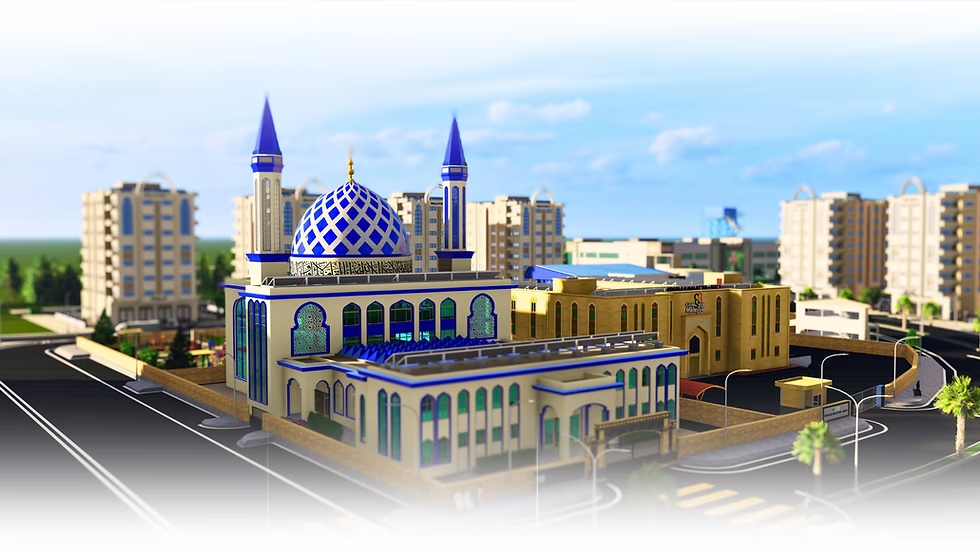
Starting a Waqf Project for Your Local Mosque or Community Space
Many Muslims feel a deep connection to their local mosque or community center. These spaces are where we gather to pray, learn, celebrate, and support one another. Yet many community leaders and members recognize that these beloved spaces need upgrades, maintenance, or enhancements to serve their communities better. If you have felt the desire to contribute meaningfully to your local mosque or community space, starting a waqf project might be exactly what you’re looking for.
A waqf focused on your local community space creates lasting benefit and allows the institution to continue improving and serving for generations. Rather than making a one-time donation, you create a sustainable source of support that can address ongoing needs: facility maintenance, improvements, furnishings, and equipment.
This guide will walk you through the practical steps of starting a waqf project for your local mosque or community space, helping you transform your vision of a better community facility into a reality.
Step 1: Identify Your Community’s Needs
Before launching a waqf project, spend time understanding what your community actually needs. Different mosques and centers have different priorities. Some might need:
- Repairs and maintenance of the building
- Upgrade of furnishings and carpeting
- Installation of modern heating or cooling systems
- Creation of prayer areas for women or children
- Improvement of educational facilities
- Expansion of social services
- Renovation of ablution areas (wudu)
- Beautification and aesthetic improvements
Talk to the mosque leadership, speak with regular attendees, and observe what challenges or gaps exist. This groundwork ensures that your waqf addresses genuine needs rather than assumed problems.
Step 2: Gain Support From Leadership
No waqf project succeeds in isolation. You need the support and cooperation of your mosque or community center’s leadership. Schedule a meeting with the imam, board members, or administrative leaders to discuss your vision for a waqf project.
During this discussion:
- Present the needs you’ve identified
- Explain how a waqf would benefit the community long-term
- Ask about their priorities and vision
- Understand existing governance structures and how waqfs are managed
- Clarify the timeline and expected outcomes
Leadership support is crucial because they will likely play a role in administering the waqf and ensuring it aligns with the mosque’s mission and values.
Step 3: Define the Scope and Goals of Your Waqf
Be specific about what your waqf will address. Rather than a vague “improve the mosque,” define clear goals such as:
- “Provide annual funding for building maintenance and repairs”
- “Replace prayer carpets every five years with high-quality materials”
- “Fund the utilities (electricity, water, heating/cooling) for the community center”
- “Support the educational programs of the mosque”
Clear goals make it easier to measure success, manage expectations, and ensure that the waqf continues to address its intended purpose over time.
Step 4: Determine the Financial or Material Contribution
Waqf doesn’t have to be only about money. You can establish a waqf through various forms of contribution:
- Monetary Waqf: Contribute a sum of money that generates investment returns, with profits supporting the community space.
- Property Waqf: Donate real estate that can be rented out, with rental income supporting the waqf.
- Equipment or Furnishings Waqf: Donate durable items like carpeting, furniture, or equipment.
- Skill-Based Waqf: Contribute professional services, maintenance expertise, or volunteer labor.
The form of your contribution should align with the community’s needs and your personal circumstances. For example, if you want to ensure that your local mosque always has beautiful, quality carpeting, you might establish a furnishings waqf or partner with a supplier like Nusantara Carpet to provide materials on a continuous basis.
Step 5: Establish Management and Governance Structure
One of the most important aspects of a successful waqf is clear management and governance. Determine:
- Who will oversee the waqf? Usually this is the mosque board or a designated committee.
- How will decisions be made? What process will be used to determine how funds or materials are used?
- How will accountability be maintained? How will donors be informed about how their contribution is being used?
- What happens if the original purpose can no longer be served? How can the waqf be adapted to continue serving the community?
Strong governance protects the waqf and ensures it serves its purpose for generations.
Step 6: Consider Tax and Legal Implications
Depending on your location, there may be legal and tax considerations for your waqf. Consult with:
- Legal professionals familiar with waqf law in your jurisdiction
- Tax consultants to understand how the waqf affects your tax situation
- Islamic scholars to ensure compliance with Shariah principles
- Your mosque’s existing legal advisors
This step may seem bureaucratic, but it protects both you and the community by ensuring everything is properly documented and legally sound.
Step 7: Begin with a Feasibility Study or Pilot Project
If you’re uncertain about committing to a large waqf immediately, consider starting with a smaller pilot project. For instance, you might fund carpeting repairs for one prayer area to demonstrate the concept, or provide funding for one year of maintenance to show how the system works.
A pilot project allows you to:
- Test the management structure
- Build community confidence
- Identify any challenges or adjustments needed
- Refine the scope before committing to the full waqf
Step 8: Seek Scholarly and Community Guidance
Consult with knowledgeable Islamic scholars about your waqf plans. They can provide guidance on:
- Ensuring the waqf complies with Shariah principles
- The types of assets that can be used for waqf
- Best practices for waqf management
- How to document the waqf properly
Additionally, engage with your community. Share your vision and seek input. Community buy-in makes the waqf stronger and more likely to succeed.
Step 9: Create a Formal Waqf Document
Once you’ve done your groundwork, work with legal and religious advisors to create a formal waqf document. This document should specify:
- The nature and details of what is being endowed
- The intended beneficiaries (the community space and its users)
- The specific purpose of the waqf
- How the waqf will be managed and by whom
- How annual reports or accountability will be provided
- Contingency provisions (what happens if circumstances change)
Step 10: Plan for Communication and Accountability
A successful waqf maintains transparency and communication with the community. Plan to:
- Provide annual reports on how the waqf has been used
- Share updates on the impact and outcomes
- Maintain donor communication and recognition
- Document improvements made through the waqf
- Invite community feedback and input
Good communication builds trust and encourages others in the community to establish their own waqfs.
Practical Example: A Furnishings and Maintenance Waqf
Let’s consider a concrete example. Imagine your mosque’s prayer carpets are worn and need replacement. You could establish a waqf specifically for carpeting and furnishings:
Structure: You contribute $10,000 to create a waqf fund. The money is invested conservatively, and the annual returns (approximately $500-700 depending on investment) are used annually to support carpeting needs, replacement, and maintenance.
Implementation: The mosque works with quality suppliers who understand Islamic aesthetics and durability requirements. Every few years, portions of the waqf fund are used to refresh or replace carpeting in different areas of the mosque.
Outcome: The mosque always has beautiful, well-maintained prayer carpets. The community feels cared for and dignified. Your rewards continue indefinitely as people pray on the carpets funded by your waqf.
Addressing Common Challenges
Starting a waqf project may face some challenges:
- Administrative burden: Address this by clearly assigning responsibilities to the mosque’s existing administrative structure.
- Changing community needs: Build flexibility into your waqf documentation to allow adaptation if circumstances change dramatically.
- Limited initial resources: Start small. Even the smallest waqf is able to create a significant impact in the community.
- Lack of community awareness: Educate your community about waqf through sermons, workshops, and informational materials.
Expanding Your Waqf Over Time
A waqf is not necessarily static. As your resources grow or as community needs evolve, you can expand your waqf. Many successful waqf projects begin modestly and grow as they prove their value to the community.
Conclusion: Transform Your Community Space Through Waqf
Starting a waqf project for your local mosque or community space is a meaningful way to create lasting positive change. By following these steps—identifying needs, gaining leadership support, establishing clear governance, and maintaining transparency—you can establish a waqf that serves your community for generations.
The beauty of this approach is that you’re not just making a one-time donation. You’re creating a sustainable system that continues to support and improve your community space long into the future. You’re investing in the places where your community gathers, learns, and connects with faith. And in doing so, you’re participating in a tradition of waqf that spans centuries of Islamic civilization.
Don’t let hesitation prevent you from acting. Start the conversation with your mosque leadership today. Explore what needs exist. Envision what’s possible. Your community’s beloved space is waiting for the gift of your vision and generosity.
Want to read more about mosque? Click here>>>
Or want to give infaq? There’s Infak.je.
For more info about carpets? Check out Nusantara Carpet.
Want to deepen your knowledge of religious lectures? Check out Ceramah Ringkas