
The name of Allah, the Most Wise, the Most Just. One of the most profound aspects of waqf is not just its present impact, but its ability to create ripples of goodness that extend far beyond the lifetime of the original donor. The stories of waqf and its lasting impact are testimonies to the enduring power of sincere generosity and faithful stewardship.
Throughout Islamic history and into the present day, there are countless examples of waqf established by individuals—some famous, most ordinary—whose contributions continue to bless humanity long after they have passed away. These stories are reminders of what becomes possible when we think beyond our own lives and invest in the eternal good of others.
The Scholar Who Became Immortal Through Knowledge
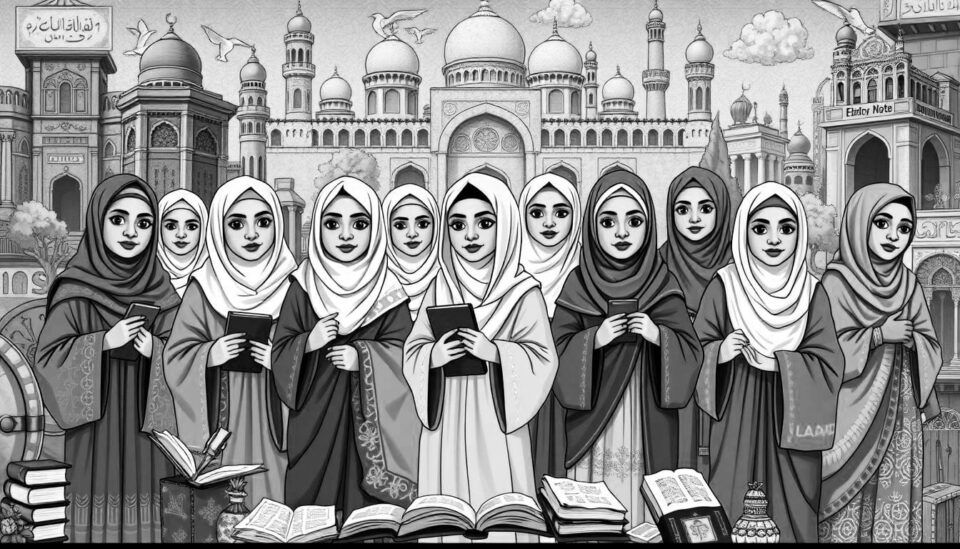
Consider the story of many Islamic scholars who, recognizing that their greatest treasure was knowledge, established waqf to ensure their learning would benefit future generations. One such scholar in medieval Egypt established a waqf endowment to maintain a madrasa—an Islamic school—where students would be taught Quran, hadith, Islamic jurisprudence, and languages.
When this scholar passed away more than eight centuries ago, one might have expected his educational work to end with his death. But because he had established it as waqf, the school continued operating. The income from the endowment sustained the teachers’ salaries, purchased books, and provided scholarships for poor students. The school operated continuously for hundreds of years, educating thousands of students who went on to become scholars, judges, educators, and leaders.
Today, the descendants of students educated in that waqf-funded school continue to benefit from the inheritance of knowledge passed down to them. The chain of learning never broke. Countless individuals can trace their intellectual and spiritual development back to a man who lived centuries ago and had the foresight to make his contribution permanent through waqf.
This story repeats itself across the Muslim world. Knowledge endowed through waqf became a perpetual gift that kept giving.
The Widow’s Water System
Another moving example is that of a widow in a small village who, having little material wealth but recognizing a critical community need, established waqf for a water system. Clean water was scarce in her village, and people—especially children—suffered from water-borne illnesses.
The widow contributed her most valuable asset—a small piece of agricultural land she owned—as waqf. The income from the land was dedicated to building and maintaining a well and water distribution system for the village.
Today, more than a century later, descendants of that widow’s village report that the water system, maintained through waqf income and enhanced over the years, continues to serve thousands of people daily. The widow never knew the thousands of lives her simple waqf would touch. She never calculated the exact impact in terms of diseases prevented or lives saved. But her sincere intention and her willingness to sacrifice her own security created a legacy of health and well-being that stretches across generations.
What is remarkable is that the widow’s name is largely forgotten. Few people in the village today know who established the system or remember the specific contribution she made. Yet her reward continues multiplying with every person who benefits from that clean water. This is the profound promise of waqf—that the reward continues even when the donor is forgotten by the world, known only to Allah.
The Merchant’s Library
In another compelling story, a wealthy merchant established a waqf to create a library containing thousands of books on Islamic sciences, Arabic literature, mathematics, astronomy, and medicine. The library was housed in a beautiful building, and the waqf endowment ensured that the library would remain open, updated with new books, and accessible to all students and scholars regardless of their economic status.
That library became a beacon of knowledge in its region. Students traveled from distant lands to study its collections. Scholars made discoveries and wrote treatises while consulting its resources. The library became a center of intellectual activity and advancement.
The merchant who established this waqf never completed all the books himself. He never met most of the students who benefited from his contribution. Yet through his foresight, knowledge was democratized. The richness of Islamic intellectual tradition was preserved and made accessible. Generations of students were inspired to pursue learning and contribute their own knowledge to humanity.
Today, centuries later, the spirit of that waqf-funded library continues through digital platforms and educational initiatives that embody the same principle: making knowledge universally accessible. The merchant’s vision of knowledge as a public good that should be preserved and shared lives on.
The Orphan Who Became a Leader
Sometimes the stories of waqf’s impact are deeply personal. There is a story of a man who, as a child, was orphaned and destitute. An organization funded through waqf took him in, educated him, fed him, and cared for him during his vulnerable years. That waqf gave him hope when he had none, opportunity when circumstances threatened to limit him forever.
Years later, when that orphan became an adult, he established his own waqf to support other orphans. His contribution was motivated by gratitude for the waqf that had saved his childhood. The waqf he established eventually helped thousands of other orphaned children who otherwise might have suffered similar deprivation.
One of those children, supported by his waqf, grew up to become a healthcare worker who dedicated her career to serving poor communities. The impact multiplies across generations—the original waqf saved one child, who inspired another, who now serves thousands.
These personal stories of transformation reveal something essential about waqf that statistics cannot capture: waqf is not just about money or resources. It is about human dignity, restored hope, and the opportunity for people to fulfill their potential.
Waqf in Modern Communities
The power of waqf to create lasting impact continues in modern times. In contemporary Muslim communities, there are stories of waqf established in recent years already showing transformative results.
In one community, a collective waqf for education has provided scholarships to hundreds of students who would otherwise have been unable to attend higher education. Some of these students have graduated and returned to their communities as doctors, engineers, and teachers. The cycle of impact continues as the waqf helps new generations while benefiting from the success of previous students who contribute back.
In another community, a waqf established for women’s economic empowerment has trained thousands of women in various skills and professions. These women have started businesses, supported their families, and become role models for younger generations. The waqf continues growing as successful beneficiaries contribute their own resources to expand the program.
Digital platforms and organizations like nusantaracarpet.com represent modern manifestations of waqf principles—connecting communities, sharing resources, and creating opportunities across geographical boundaries. The impact of such waqf initiatives is still unfolding and will likely extend far beyond what current participants can imagine.
The Compounding Effect of Generosity
What these stories reveal is the compounding effect of generosity established through waqf. Unlike one-time charity, which has immediate but limited impact, waqf creates exponential growth in goodness over time.
Imagine a waqf established with a modest sum that generates 5% annual income. In the first year, that income helps some people. In the second year, slightly more income (from both the original amount and the accumulated returns) helps more people. By the tenth year, the accumulated wealth has grown substantially. By the hundredth year, if the waqf is properly managed, the impact could be unimaginably large.
More importantly, the human impact compounds. Someone helped by a waqf-funded scholarship becomes an educated adult who contributes to society. They earn a living, raise children, and pass on values and knowledge. The impact extends through families and across communities. A single waqf can ultimately influence thousands of lives across multiple generations.
The Eternal Reward
What truly makes these stories remarkable from an Islamic perspective is the promise that the donor’s reward continues throughout all of this impact. The one who established the waqf continues to receive reward as long as people benefit from it. This is the profound mercy and justice of Allah.
A person who gives sadaqah (regular charity) receives reward equal to their contribution. But a person who establishes waqf receives exponentially more—reward that continues for centuries as the waqf generates benefits generation after generation.
This doesn’t mean the donor becomes wealthy or famous. Most donors of significant waqf are quickly forgotten by the world. But their reward with Allah multiplies infinitely. The obscure widow whose name no one remembers might, through her waqf, have a reward more magnificent than that of famous philanthropists because her contribution, though humble in resources, was vast in ongoing benefit.
A Reflection for Our Time
These stories of lasting waqf impact should inspire us to think differently about our own lives and contributions.
What legacy do we want to leave? What problems that concern us today might still need solving in fifty years, a hundred years, or centuries from now?
When we look at these stories, we see that waqf is not a luxury available only to the exceptionally wealthy. Ordinary people—farmers, merchants, widows, teachers—have established waqf with resources available to them. They didn’t wait for the perfect amount or the ideal circumstances. They recognized a need, committed their resources, and trusted Allah with the outcome.
These stories also remind us that impact is not measured by how many people know or appreciate our contribution. The widow’s water system is not less impactful because her name is forgotten. The scholar’s school is not less valuable because history doesn’t record its specific origins. The merchant’s library is not less important because no one visits it anymore in its original form. Impact is measured by the real change in human lives—by knowledge gained, by hunger satisfied, by hope restored.
As you contemplate your own waqf, remember these stories.
Remember that your contribution, whatever its size, can create ripples that extend far beyond your imagination. That you need not see the full fruit of your labor. Through waqf, you can become part of an unbroken chain of goodness stretching from your time into the indefinite future.
The Prophet Muhammad, peace be upon him, told us that when a person dies, their deeds end except for three things: beneficial knowledge that continues to be shared, righteous children who pray for them, and waqf that benefits people. These stories are proof of that promise. They are testimony to the eternal nature of well-established waqf.
May Allah grant us the wisdom to establish beneficial waqf, the sincerity to make our intentions pure, and the trust to believe that our contribution, combined with Allah’s blessing, will become a source of endless goodness for humanity. May our waqf be a legacy of love that transforms generations yet unborn.